

Why Do I Have a Low Meta (Facebook) Click ID (fbc)?
Learn why Meta Click ID (fbc) coverage may appear low in Events Manager, how Click IDs are captured, and how Meta uses additional data and attribution methods to connect conversions to your ads.
Overview
Follow this guide to understand why Meta (Facebook) Click ID (fbc) values may appear low in Events Manager, and how Meta attribution works beyond click-based tracking.
It is common to see a low percentage of Click IDs associated with events. This does not indicate an issue with tracking, but rather reflects how Meta attributes conversions using both click-based and view-based data.
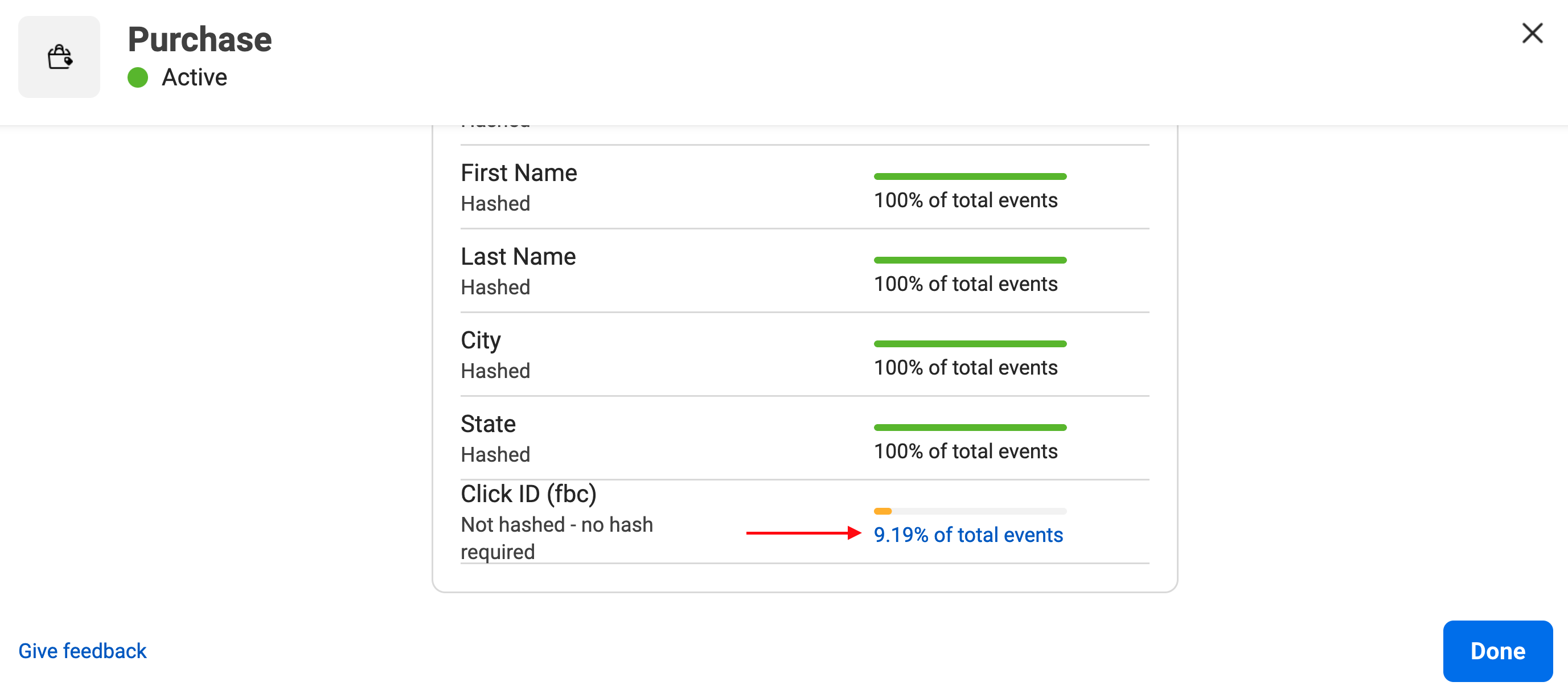
What is a Meta (Facebook) Click ID (fbc)?
A Meta (Facebook) Click ID (fbclid) is a parameter appended to a URL when a user clicks on a Meta ad. This identifier helps Meta connect on-site activity back to a specific ad click.
Why Click ID Coverage is Low
Not All Traffic Comes from Meta Ads:
Only users who click on a Meta ad will have a Click ID. Traffic from other sources, such as search engines, direct visits, or other marketing channels, will not include this parameter.
Meta Tracks All Events (With or Without Click IDs):
Meta requires that all events are sent back to its platform, even if a Click ID is not present. This ensures full visibility into user behavior, regardless of traffic source.
How Meta Attribution Works Beyond Click IDs
View-Through Attribution:
Meta does not rely solely on clicks to attribute conversions. Many users see an ad but do not click it, and instead return later to complete a purchase. To account for this behavior, Meta uses view-through attribution.
The most common attribution windows are:
- 1-day view
- 7-day click
This means a conversion can still be attributed to an ad even if the user never clicked it.
Click IDs Are Not Required for Attribution:
While Click IDs help with direct click tracking, Meta can still attribute conversions without them. Meta uses additional data points to match users and attribute events, including:
- Email address
- Phone number
- Name
- IP address
- Device and browser identifiers
- fbp (browser cookie identifier)
Because of this, a Click ID is not required for Meta to attribute a conversion.
Realistic Expectations for Click vs View Attribution
It is normal for the majority of conversions to be attributed using view-through data rather than click-based data.
In many cases:
- 90% of conversions may be attributed via views
- 10% may be attributed via clicks
This distribution reflects typical user behavior and Meta’s attribution model.
Additional Considerations: Complex Customer JourneysTracking a full click-based journey requires multiple steps:
- Click on an ad
- Land on the website
- Browse products
- Add to cart
- Complete checkout
Each step must be successfully tracked and sent back to Meta. Due to browser restrictions, privacy changes, and cross-device behavior, this process is increasingly difficult to capture end-to-end.
This is another reason why Meta relies heavily on view-through and probabilistic attribution methods.
Updated 23 days ago